Landscaping
Shade Garden Design: Layering Plants for Color from Spring to Fall
A shaded yard is not a problem to solve so much as a different set of rules. The light is softer, the soil stays damp longer, and the season starts later and finishes slower. Most disappointing shade gardens fail for one reason: everything blooms in May, and by July you are staring at a green carpet with nothing to hold your eye. Layering fixes that. Stack plants by height and by season — bulbs and groundcovers at the bottom, perennials in the middle, shrubs and small trees above — and something is always doing work in the border.
Read the Shade Before You Plant Anything
Shade is not one condition. A bed that gets four hours of morning sun will grow a very different plant list than the strip along a north wall that never sees direct light. Spend a day watching your site: note where sun lands at 9 a.m. and again at 3 p.m., and whether the light filters through high branches or is blocked by a solid hedge.
Two other things matter as much as light. First, tree roots. Under a mature maple or willow the soil is dry, matted, and full of hungry roots, and new perennials will struggle no matter how often you water. Second, drainage. Shade plus compacted clay is a swamp in spring and brick in August. Work two or three inches of compost or leaf mold into the top layer before planting, but keep it away from trunk flares and never mound mulch against a shrub's stems.
If your shade is deep — dense evergreens, little sky light — be realistic. Epimedium, wild ginger, ferns, and hellebores cope. Lavender and roses do not.
Build the Garden in Layers
Think of a shade border as five stacked layers, each with a job.
- Overstory. The trees you already have. Limb up a few lower branches to let in more filtered light, but don't gut the canopy — you want dappled shade, not sun.
- Shrubs. Structure, height, and winter bones: oakleaf hydrangea, rhododendron, mountain laurel, viburnum, dwarf Japanese maple, yew.
- Perennials. The core of color and texture: hosta, heuchera, hellebore, astilbe, hardy geranium, Solomon's seal, ferns.
- Groundcovers. These knit the soil together and hide bare mulch: wild ginger, foamflower, sweet woodruff, creeping sedge, moss.
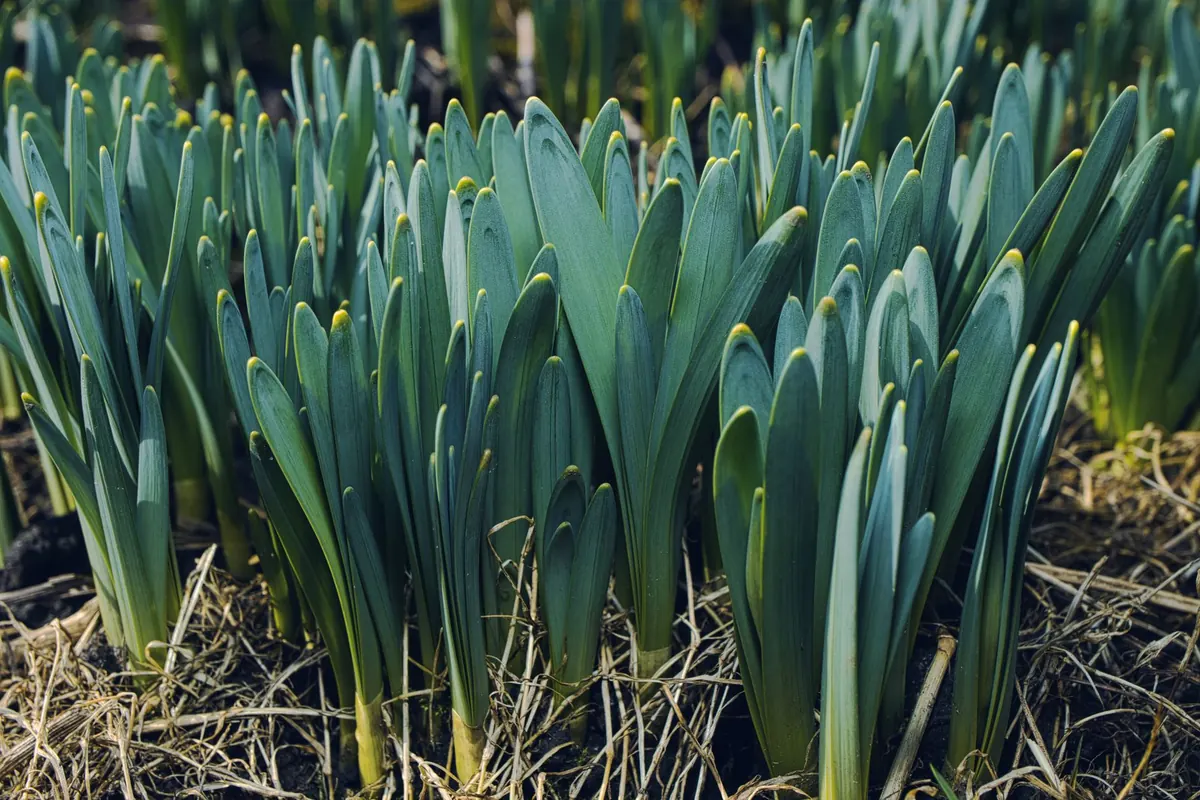
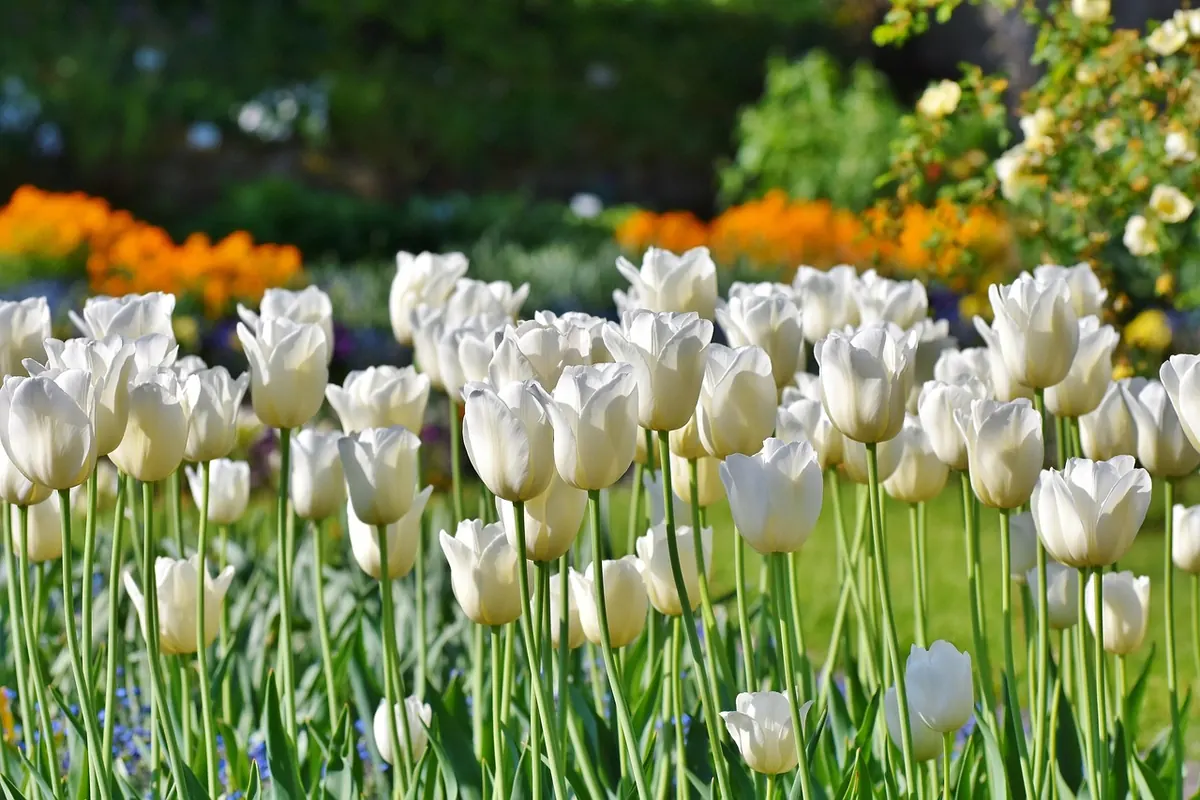
- Bulbs. Cheap early color: snowdrops, squill, crocus, daffodils, species tulips that finish before the canopy closes.
Layered well, each one covers another's off-season. When the astilbe goes brown, the groundcover beneath it is still green. When the hydrangea drops its leaves, hellebore foliage carries the bed through winter.
Spring: Start While the Trees Are Bare
Spring in a shade garden happens fast and happens before the leaves above you unfurl. Use that window. Snowdrops and squill come first, then crocus and daffodils. Hellebores hold their nodding flowers for weeks while everything around them is still low. Bleeding heart, brunnera, pulmonaria, and epimedium follow, with trilliums and wood poppies filling gaps in a woodland bed.
The trick is to plant these among perennials that will cover them later. A clump of daffodils in front of a hosta disappears neatly as the hosta expands. Epimedium, often cut back in late winter to show off its bronze-edged new leaves, makes a fine underplanting for shrubs that leaf out late.
Summer: Let Foliage Carry the Garden
By June the canopy is closed and flowers get scarce. This is where foliage earns its keep. Hostas in blue, gold, and variegated forms, Japanese painted fern, autumn fern, and the arching gold of Japanese forest grass give contrast without a single bloom. Pair bold, rounded leaves with fine, feathery ones; set dark, near-black heuchera beside something bright. Without that contrast, a shade border reads as a green blur.
Plant in drifts, not dots
One hosta here and one there looks like a mistake. Nine of the same hosta in a generous curve looks intentional. Buy fewer varieties and repeat them in odd numbers along the bed's line — it will read better from the window than a scattered collection.
Blooms do arrive: astilbe's fuzzy plumes, hydrangeas in white and pink, the small bells of hosta flowers that hummingbirds visit. Toad lilies wait until late summer. Let them stand.
Fall: Stretch the Finale
Fall color in shade is not only about leaves. Japanese anemone sends up airy pink or white flowers into September, bugbane adds tall wands, and Cyclamen hederifolium pushes up little swept-back blooms straight from the ground. Colchicum looks like a crocus and flowers when little else will.
Then the foliage turns. Oakleaf hydrangea goes burgundy, epimedium bronzes, heuchera deepens, and a small Japanese maple or viburnum lights up the back corner. Resist cutting everything down. Seed heads, dried grasses, and evergreen ferns and hellebores give the garden shape through winter and shelter overwintering insects.
Keeping the Layers Working
Maintenance in shade is mostly about timing and leaf litter. Leave fallen leaves where they land unless they smother small plants; chopped or whole, they are the best mulch a woodland bed can get. Compost or leaf mold added each fall does more for these plants than fertilizer ever will.
Water new plantings through their first two summers, even the ones labeled drought-tolerant. After that, most established shade perennials manage on their own. Divide crowded hostas, epimedium, and sedge in early spring, just as new growth shows.
One caution: don't pile mulch over crowns. A two-inch layer, pulled back from stems and trunks, holds moisture without rotting the plants you paid for.
A Simple Way to Start
Pick one bed and one season. Sketch the layers on paper — where the shrubs go, where the groundcover sweeps, which perennials repeat. Order bulbs in early fall, shrubs in spring or fall, perennials whenever the ground is workable. Photograph the bed from the same spot every month for a year; the gaps will show themselves plainly, and next spring you can fill them. A layered shade garden is not built in a weekend. It grows into itself, season by season, until there is always a reason to walk outside.
Photo: fietzfotos / Pixabay